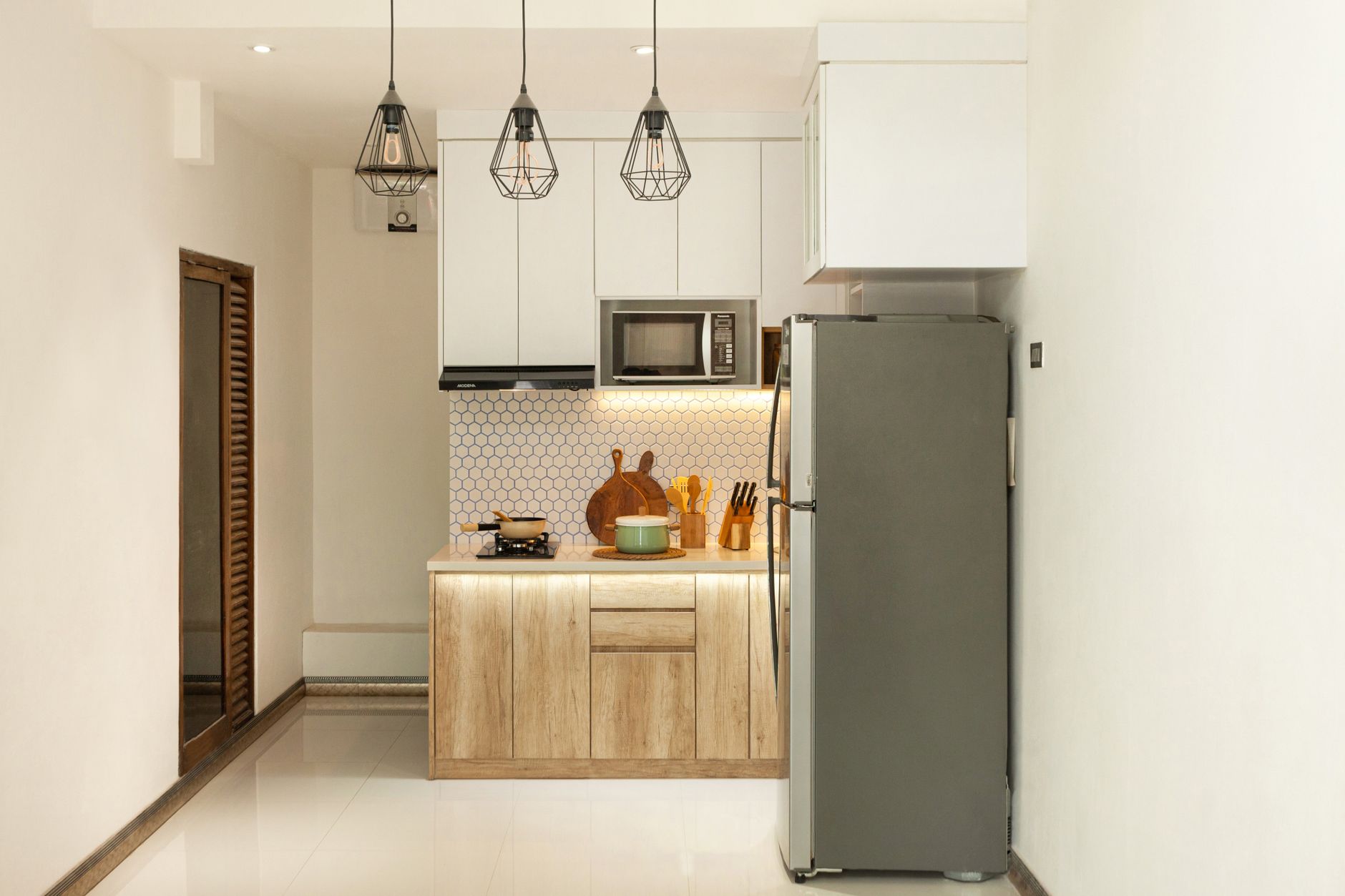
A dorm room is treated like any small, shared-adjacent space: the bed goes where the sleeper can see the door without lying directly in line with it, clutter is kept down because the room has no spare volume to absorb it, and anything genuinely fixed — a radiator, a built-in wardrobe, a window that will not open past a few inches — is left alone rather than fought. Feng shui here is mostly about arrangement and restraint, not renovation.
This matters more in a dorm than almost anywhere else this site covers, because the resident usually cannot move a wall, repaint, swap furniture for a different piece, or control what the room shares a wall with. The practical version of feng shui for a dorm room is the version that assumes almost nothing can change and asks what is still worth doing.
What actually counts as feng shui in a room this small?
In a dorm, feng shui mostly comes down to bed position, sightline to the door, and how much is stored in the open. Larger classical ideas about a building’s orientation or a plot’s surrounding land — central to Form School and Compass School — rarely apply, because a resident has no say over the building itself.
Two traditions get cited constantly in this kind of advice, and they do not agree on method. Form School (Xingshi) reads a space by its physical shape — sightlines, door position, what blocks what. Compass School (Liqi) works from precise compass directions and a birth-chart-based reading of which direction suits the individual. The Western Black Sect adaptation (BTB), which is what most English-language “dorm room feng shui” articles actually describe without naming it, drops the compass step and maps a symbolic bagua (pa kua) onto the room from the position of the door instead. For a rented room a student does not own and cannot alter, the door-based, shape-based reasoning of Form School and BTB is more usable than a compass reading that assumes the occupant can choose their orientation — which a dorm resident cannot.
Where should the bed actually go?
The consistent guidance across Form School and BTB writing is that a bed is better placed where the sleeper can see the door from it, without being directly in line with the doorway or with the foot of the bed pointed straight at it. This is sometimes called the commanding position.
The practical reasoning given is straightforward: a person startled awake by someone entering, with no warning and no sightline, sleeps less easily than one who can see the door without effort. That is a design argument about a startle response, not a claim about luck. Dorm rooms are usually small enough that a true diagonal view of the door is impossible; the more realistic aim is simply not having the bed foot-first in line with the door, and not having the headboard against the same wall as the door where someone entering is directly above the sleeper’s head. Where a room genuinely allows only one bed position and it fails this test, the tradition’s own fallback advice is covered directly in what feng shui actually suggests when the bed can’t be moved, and the reasoning behind the position itself is set out in more detail in what feng shui says about a bed that faces the door.
How do you separate sleeping, working and storage in one room?
The common suggestion is to treat the bed as one functional zone and the desk as a separate one, even where they sit a metre apart, using a rug, a shelf unit, or the angle of the desk to mark the boundary rather than relying on distance that the room does not have.
A dorm room is functionally a studio apartment at a smaller scale, and the same problem — one open space doing several jobs — is worked through at length in how to apply feng shui in a studio apartment and in how to separate sleeping and living areas in one room. The reasoning given for keeping the desk out of direct line with the bed, or at least not facing it, is that a workspace within eyeline of the bed makes it harder to switch off from studying — a practical claim about association and habit rather than a claim about energy. Where the desk sits inside the bedroom because there is no other option, the specific concerns raised about a desk sharing sleeping space are set out in what feng shui says about a home office in a bedroom.
What does clutter actually do to a room this size?
Clutter is treated as the first problem in every school of feng shui, not a minor one, because it blocks movement and sightlines in a space with no room to spare. In a dorm this is closer to a literal fire-safety and mobility issue than a symbolic one.
The reasoning is explained fully in why clutter is the first problem in every feng shui school: a cluttered floor is an obstacle course before it is anything else, and an obstacle course is stressful and impractical regardless of what tradition a person follows. In a dorm, clutter also tends to collect precisely where it is most disruptive — the path between bed and door, and the surface of the desk. Storage strategy for rooms with genuinely limited square footage, including what to store under a bed and what not to, is covered in what feng shui says about storage in a small home and, more specifically, in what feng shui says about storing things under the bed.
Does a shared wall or shared corridor matter?
Yes, in the sense that noise and disturbance from a neighbouring room or a corridor are treated as a live disruption to sleep, and the standard suggestion is to place the bed against a quieter wall where the room allows a choice, and to use a rug, curtain or soft furnishing to absorb some sound rather than expecting to block it entirely.
This is not medical advice, and any actual sleep disturbance from noise, temperature or ventilation that affects health or wellbeing is a matter for a doctor or the accommodation provider, not a design adjustment. The general reasoning feng shui offers about noise and how it is thought to disturb a room’s function is laid out in what feng shui says about noise. Ventilation is a related, separate issue: dorm rooms are frequently poorly ventilated relative to their size, and stale air is treated in the tradition as something to actively manage rather than accept, which is discussed in what feng shui says about ventilation and stale air.
Can a dorm room be personalised without breaking any rules?
Photographs, artwork, plants and small objects are all treated as fine in feng shui terms provided they do not create clutter, block the door, or sit directly over the bed in a way that could fall. There is no tradition-based reason to avoid personal decoration; the concerns raised are about placement and volume, not content, with a few specific exceptions.
Mirrors facing the bed are one of the more commonly raised concerns, discussed with the actual reasoning (rather than the folklore version) in mirror facing the bed: is it actually a feng shui problem?. This site does not suggest buying any object — a crystal, a coin, a specific plant — to produce an effect, and the reasoning for that position is explained in why “buy this lucky object” is bad feng shui advice. A real, low-maintenance houseplant is a reasonable, low-cost way to address stale air and add some green to a small room, and what the tradition says about plants specifically (as distinct from air-quality claims, which are a separate, testable subject) is in what feng shui says about houseplants and air quality.
What can’t be changed in a dorm room, and does that matter?
Fixed elements — the building’s orientation, a shared wall, a window that does not open fully, furniture bolted or built into the room — cannot be altered, and the tradition’s own position on this is to work with layout and objects rather than treat the room as a failure. Renting or occupying a room under a housing contract that forbids structural change is a normal, expected constraint, not a problem the tradition asks a resident to solve.
This reasoning is set out more generally in what feng shui says about renting and things you can’t change, and the same logic applies directly to shared accommodation more broadly, including houses split into rooms with communal kitchens and bathrooms, in how feng shui applies in a shared house. None of this article is a substitute for advice from a doctor about sleep or health, or from the accommodation provider or a qualified professional about tenancy terms, building maintenance or safety — those are separate, practical matters and feng shui does not stand in for any of them.
Does any of this actually work?
Feng shui consultants themselves disagree on method, school and emphasis, and this site does not claim the practice is supported by scientific evidence for outcomes like sleep quality, academic performance or wellbeing. What can be said honestly is that several of its recommendations — clear sightlines, reduced clutter, attention to noise and air, a bed position that avoids a startled wake-up — overlap with ordinary, testable design sense, and that overlap is explained rather than assumed throughout the site’s Basics section and its Small Spaces section, both useful starting points for a reader arranging a single small room from scratch.
About this site. Feng Shui Pack explains what the feng shui tradition holds and which school holds it, from published sources. Feng shui is a tradition of placement and orientation, not a science: nothing here will bring you wealth, health, luck or a relationship, and we never claim otherwise. Where a suggestion has an ordinary practical reason — daylight, airflow, sightlines, less clutter — we say so; where it does not, we say that too. This is not medical, financial, legal or tenancy advice. If a decision matters, talk to a professional in that field.